La plante cacao s’est vu donner son nom botanique par le scientifique suédois Carl von Linné (*1707-†1778), qui la baptisa “Theobroma cacao” (cacao, nourriture des dieux). Ce fut la première contribution de la Suède au monde du chocolat…
Ce mot cacao – comme poivre ou café – est pour beaucoup associé à des aventures exotiques. Enfant, cela me faisait rêver et courir le monde m’attirait irrésistiblement. Cette chance me fut donnée par mon père, grâce auquel j’ai pu découvrir tôt l’univers des plantations en Afrique. Originaire de Stockholm et diplomate, il partit d’abord travailler à l’ambassade de Suède à Paris en 1945. Quelques années plus tard son odyssée le porta vers le Cameroun où il dirigea des factoreries. Enfin, en 1979, il s’installa à Madagascar où il reprit diverses propriétés, en particulier de grandes plantations de sisal.
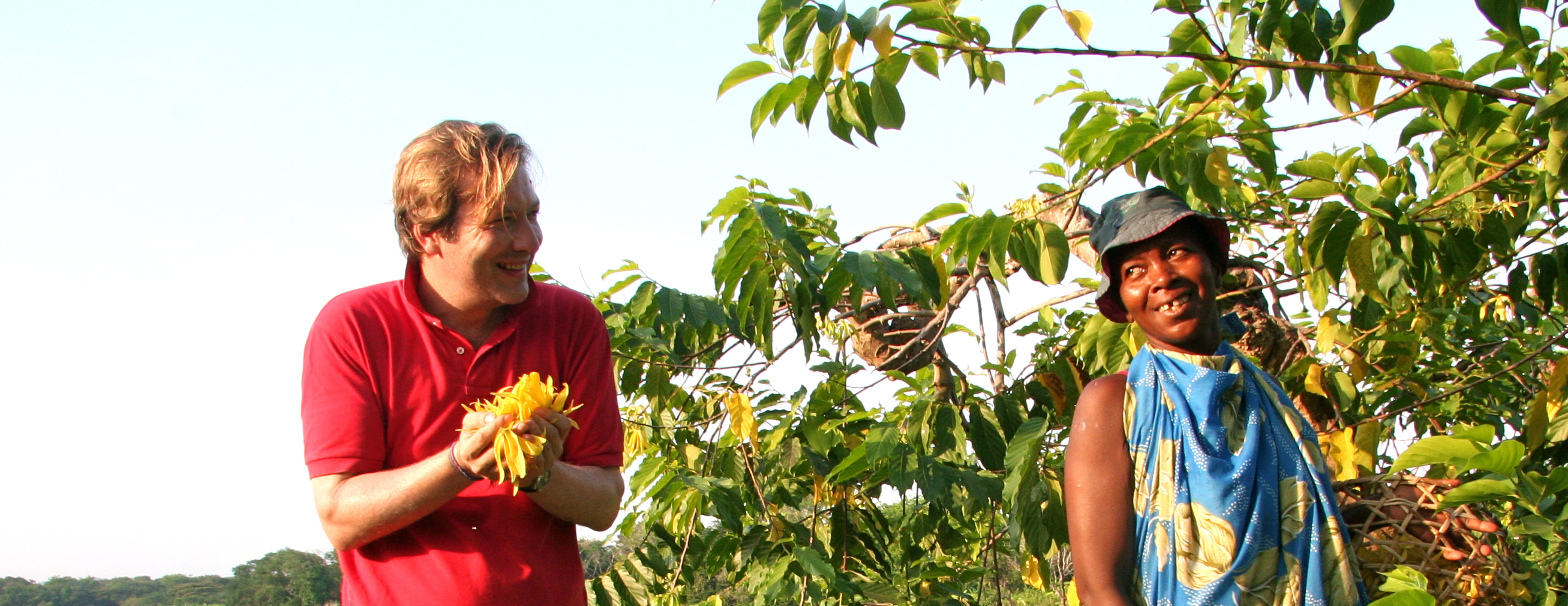
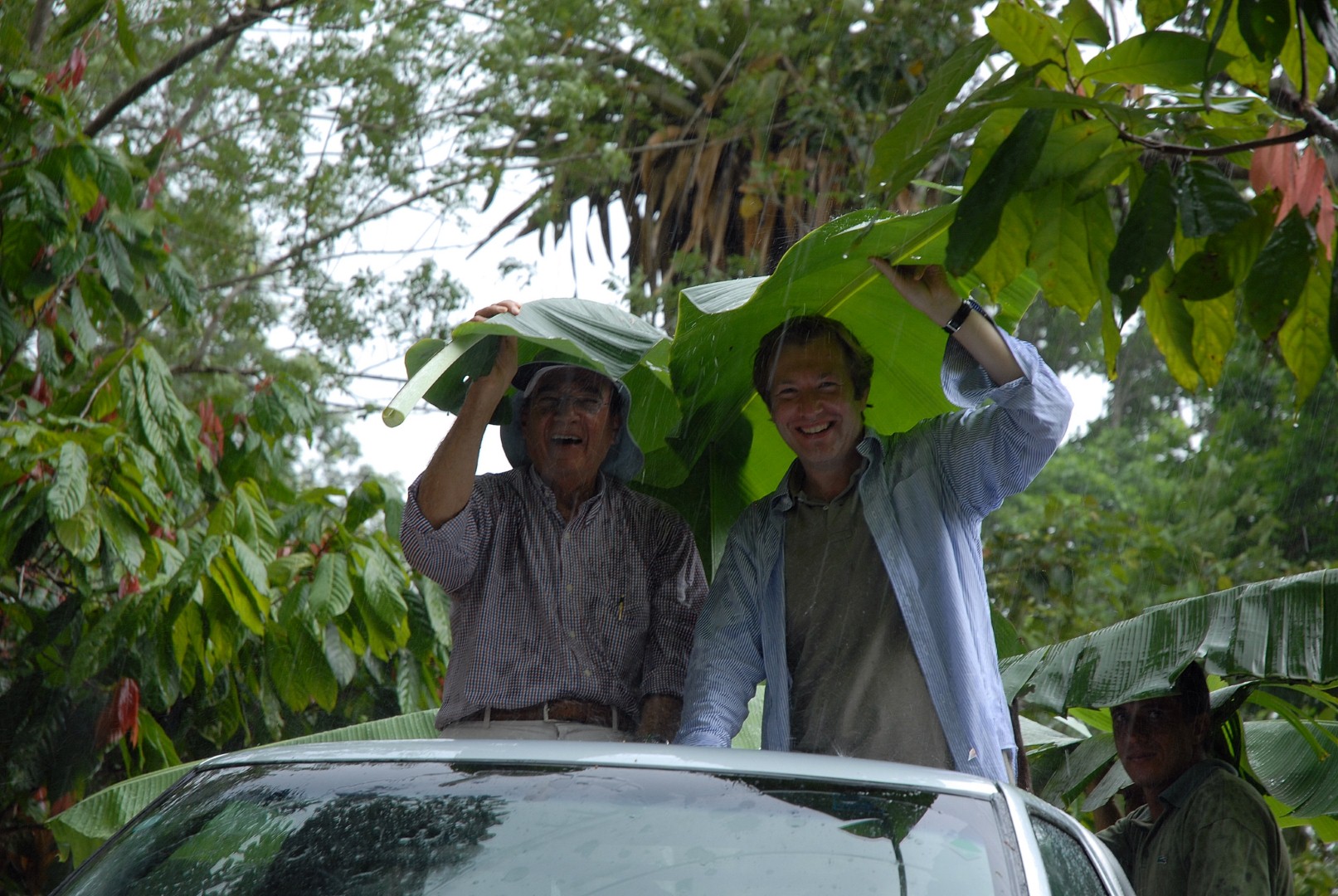
C’est donc à Madagascar, dans nos plantations familiales que débuta mon “voyage” dans le monde fascinant de ces merveilleux produits tropicaux. Là, j’ai appris durant plusieurs années les subtilités du métier de planteur. Puis j’ai choisi de me consacrer plus spécialement aux cacaos fins et aux épices. J’ai relancé une vieille plantation à Madagascar et mis cette origine sur la carte du cacao. Puis, en 2009, j’ai repris des plantations au Brésil et je m’implique en outre dans la commercialisation de cacaos, poivres et autres produits d’Indonésie. Partout, notre objectif demeure le même: offrir les plus hauts niveaux de qualité dans un cadre éthique et respectueux de l’environnement.
Mes plantations de Madagascar, du Brésil et d’Indonésie fournissent ainsi les meilleurs chocolatiers et les plus grands chefs. En collaborant avec ces artistes passionnés, j’ai découvert l’alchimie de la transformation du cacao en chocolat et aussi comment les poivres peuvent sublimer des recettes.
Développer une petite mais très exclusive ligne de chocolats et autres produits fins de plantations fut un aboutissement logique.
La création de ÅKESSON’S n’aurait pas pu avoir eu lieu sans la collaboration et le soutien de ma famille et de mes amis. Je leur suis infiniment reconnaissant, ainsi qu’aux planteurs et à l’équipe avec qui je travaille quotidiennement.
Ensemble, nous vous invitons pour un voyage de découvertes autour du monde de nos produits exotiques.
Bertil Åkesson
We aim at offering to our clients our passion for tropical foods and the highest possible quality achieved in a sustainable way. We want people to purchase our cocoa and other fine exotic foods because of their superior quality, not because of how we grow it.
However, our values are important and besides our action on the field, we chose to dedicate in this web-site a section about it to contribute in bringing a new awareness about today’s greatest challenges in our society.
SUSTAINABLE PEOPLE

Technically, we cannot be “Fair Trade” certified” as we are not “Traders” but owner of estates. However, one certification institution has extended its business and offers to “check” if they can certify us, provided that we pay them the equivalent of 10% of the salaries for all our employees… we rather spent this money for our people.
- In MADAGASCAR, the plantation is a single living organism where we try to provide a secure working and social habitat. Food, shelter, health, security, liberty and spiritual activity are what the farm offers.
One example of this, in a country where medical goods are not easily available and where employees easily spend up to half their revenues in medicines, we have organized to collect them in Europe and redistribute them on the plantation. This is to be added to the best possible retribution and the integration of the whole families to our community.
- In BRAZIL where we purchased our plantation in May 2009, our first move was to rebuild a decent housing for our employees, with water access, fully equipped kitchen and bath rooms and septic tanks. To many of you who read this article, things like this sound normal. Unfortunately, they are not and what is usually described as “Fair Trade” redistribution of wealth still does not pay for these “luxuries”.
We invite you to look in our gallery of image the “before VS after” photographs of the infrastructure and life we offer to our farmers.
We also have our own school for children under 7 years old and we renewed the 4 km road so that the local bus can come every morning to pick up the older kids living to the nearest city.
All our employees are officially declared and the extra amount that we pay to the State is redistributed. This sounds obvious in Europe or in America but it is still very rare in Brazil where traditionally people receive part of the production as a salary, which is not sustainable in a sense that is does not guaranties any income for retirement or social security, although the system works in a country like Brazil.
- In BALI, with direct support from USAID and AMARTA, we source from the first fully integrated fermented cacao value chain in Indonesia operating a Central Processing Unit (CPU) for the efficient fermentation, drying, warehousing and sale of Bali cacao. The CPU is a necessary step in the development of long term sustainable supply.
Cacao farmers provide wet beans to the CPU, which manages the processing through fermentation, drying and sorting. Then we purchase the finished cacao and a small transparent toll is imposed for processing services rendered.
The central processing unit aims to both ensure consistent high quality product and serve as a processing training center to regional farmers/farmer groups/cooperatives In Indonesia, the NGO “SwissContact” provides the sustainable support to collect our organic cashew nut from the Island of Flores.
- In FRANCE, we are supporting the action of the Jewish association “Oeuvre de Secours aux Enfants”, in Paris, created in 1912 by Jewish doctors in St Petersburg. All our fine exotic foods are packaged there and 25 euro cents are given to the workers for every item packed (jar or pouch). The association hosts 65 adults with disabilities, primarily mental and motor, and offers them a job with appropriate management, thus providing them with financial and social independence. Workers can complete internships or work a few days a week or just occasionally.
SUSTAINABLE PLANET
PLANTATION MANAGEMENT:
- In MADAGASCAR, all our products – cocoa, peppercorns, coffee, essential oils – are certified organic by “Ecocert” for Europe & NOP for the USA.
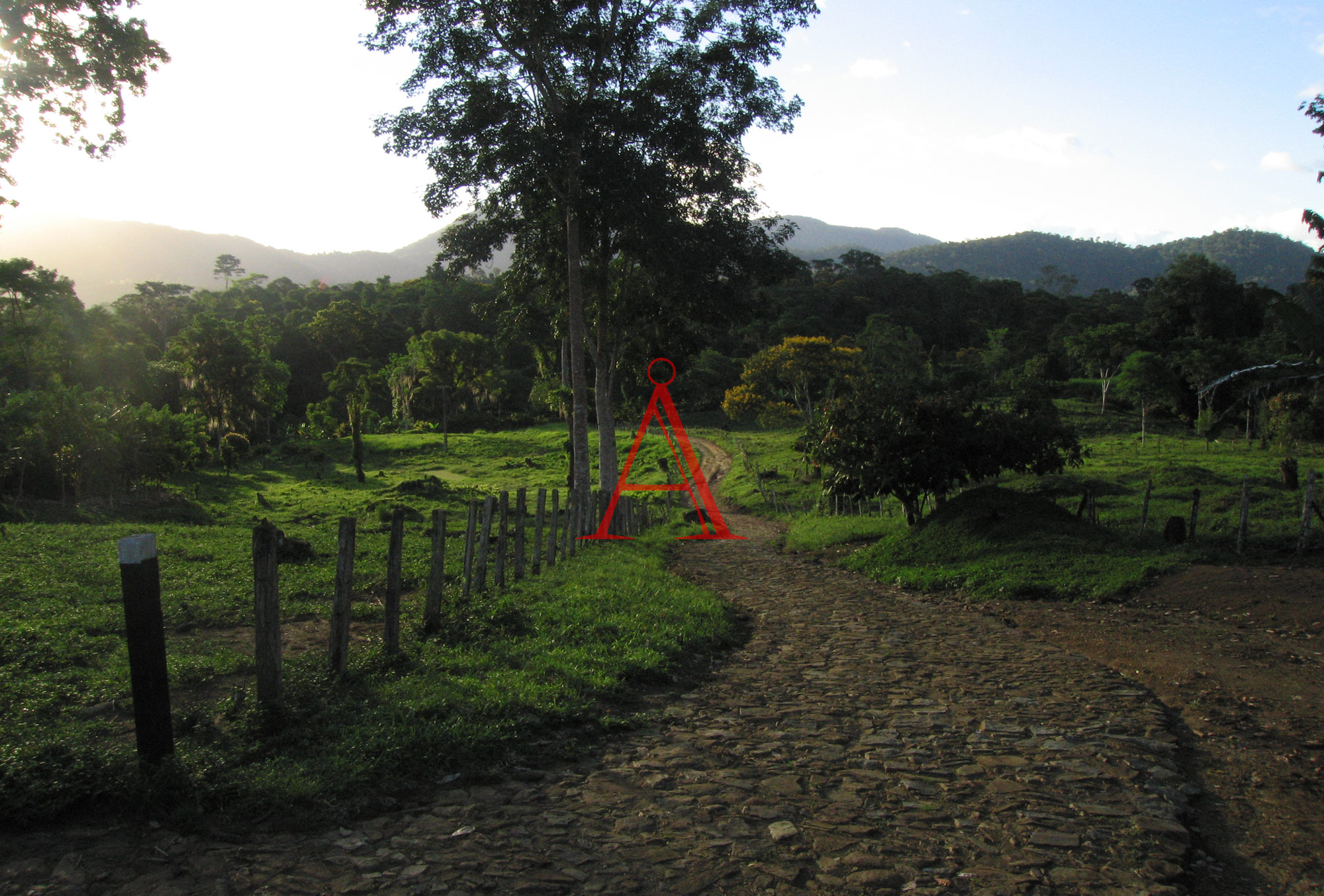
- In BRAZIL, “Fazenda Sempre Firme”, the plantation we bought in May 2009 has a commitment to the maintenance and preservation of the Atlantic Forest (Mata Atlantica). 10 % of our land has a forest area. We re-plant species such as Mogno, Eka and native varieties as Pau-Brasil, Peroba, etc. Besides we are also helping neighboring communities to protect the environment, avoiding hunting of animals, extraction of trees from reservations, protection of the river heads and rivers, selection and adequate destination of garbage.
- In BALI, cocoa and coconut blossom sugar production units are certified organic by “Control Union Certifications”.
PRODUCTION OF CHOCOLATE & FINE EXOTIC FOODS:
- Our chocolate production is in FRANCE and certified organic by “Qualité France”.
- We use organic cane sugar from BRAZIL or organic coconut blossom sugar from BALI.
- We use exclusively non-genetically-modified soja lecithin. At this point we would like to make it clear that there is nothing wrong about using soja lecithin; the real issue is that 80% of the world production is genetically modified, which is why some people radically choose to avoid this ingredient.
- ÅKESSON’S Organic, is a Swiss Company and as such has all its organic products certified organic by “bio.inspecta” in SWITZERLAND.
PACKAGING:
- The ink we use to print our chocolate packaging or our stickers is natural and organic – no chemicals are used.
- As far as possible, we use the minimum quantity of paper and packaging material. We do not make boxes bigger than they should be as we consider it is not ethic to cheat people on quantities and not responsible for the environment. In the same spirit we do not print brochures (experience shows it ends up in the bin anyway), all necessary information is available on the internet.
- Our Pepper glasses are sourced from the only company in Europe manufacturing 100% ecologically recycled glass. Here are a few reasons why recycling is so important:
1/ Recycled glass is melted at a lower temperature and therefore uses less energy (the saved energy on recycling one single bottle is enough to maintain a 100W light bulb for 4 hours). The air contamination is reduced by 20% because less energy is needed compared to other kinds of glass.
2/ We reduce sand and raw material extraction and avoid the destruction of natural resources.
3/ The volume of waste going to landfill is dramatically reduced as well as that which is involved in the illegal and uncontrolled tipping of waste (On average 1000 recycled bottles corresponds to 1 ton less of waste going to landfill). So by recycling 1 kg of used glass we save 6 litres of water + 1.2 kg of natural resources + 20% on energy. Buying recycled glass products is part of an overall waste reduction strategy. Until materials are made into new recycled content product they are not really recycled. Only when you buy recycled glass you “close the loop “to complete the recycling process and then really demonstrate commitment to environmental issues… and glass can be recycled repeatedly without any reduction in quality.